
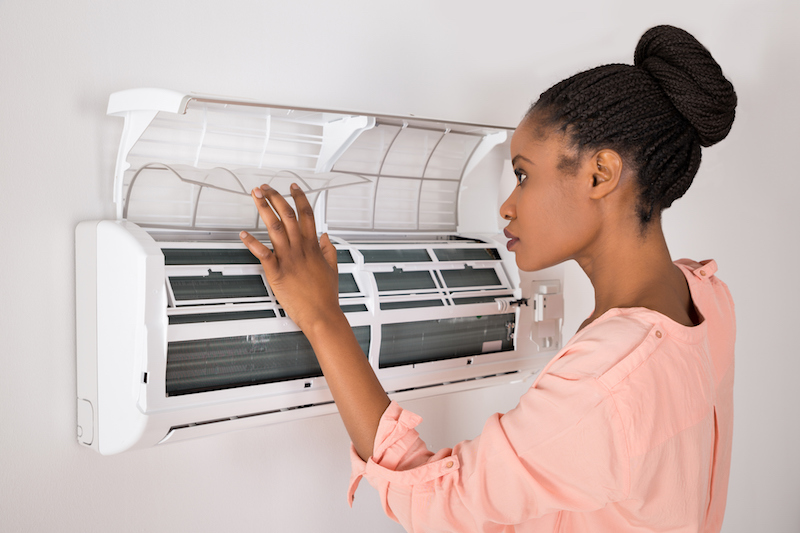
You shouldn’t need to give up comfort or drain your wallet to keep your residence at a refreshing setting during hot days.
But what is the ideal setting, exactly? We discuss recommendations from energy specialists so you can select the best temp for your residence.
Here’s what we advise for the most energy-efficient setting for air conditioning in Salida.
Recommended Thermostat Settings for Summer
Most families find placing the thermostat at 72-73 degrees provides ideal comfort. However, if there’s a huge difference between your interior and exterior temps, your AC expenses will be bigger.
These are our recommendations based on the U.S. Department of Energy (DOE) and ENERGY STAR®.
While at home: 78 degrees. While that appears warm, there are ways you can keep your residence refreshing without having the air conditioning on frequently.
Keeping windows and curtains down during the day keeps cool air where it needs to be—inside. Some window solutions, like honeycomb shades or plantation shutters, are designed to give extra insulation and better energy efficiency.
If you have ceiling fans in your house, the DOE says you can raise thermostat temps about 4 degrees hotter without sacrificing comfort. That’s due to the fact they cool by a windchill effect. Since they cool people, not spaces, shut them off when you leave a room.
If 78 degrees still seems too hot initially, try doing a test for a week or so. Start by increasing your thermostat to 78 degrees while you’re at your residence. Then, steadily turn it down while following the ideas above. You could be astonished at how refreshed you feel at a warmer temperature setting.
While away: 88 degrees. There’s no need to keep the air conditioner working all day while your home is unoccupied. Switching the temperature 7–10 degrees higher can save you as much as 5–15% on your electricity expenses, according to the DOE.
When you arrive home, don’t be tempted to put your thermostat colder than 78 to cool your house faster. This isn’t useful and often results in a more expensive electrical bill.
A programmable thermostat is a useful approach to keep your temperature under control, but you have to set programs. If you don’t use programs, you might forget to raise the set temperature when you take off.
If you need a handy fix, consider buying a smart thermostat. This thermostat connects with your phone, so it realizes when you’re at your residence and when you’re out. Then it intuitively modifies temperature settings for maximum savings. How much exactly? Typically $180 each year on heating and cooling, according to ENERGY STAR.
Another advantage of using a smart thermostat? You can use your phone to monitor and adjust temperature settings from almost anywhere.
While sleeping: Around 70 degrees. While ENERGY STAR advises 82 degrees, that could be too uncomfortable for the majority of families. The majority of people sleep better when their sleeping space is chilled, so that’s why the National Sleep Foundation suggests 65–68 degrees. But that might be too chilly, due to your clothing and blanket preference.
We advise following a similar test over a week, putting your temp higher and gradually turning it down to determine the ideal temperature for your residence. On cool nights, you may discover keeping windows open at night and using a ceiling fan is a better option than operating the air conditioning.
More Approaches to Save Energy During Warm Weather
There are extra approaches you can conserve money on cooling bills throughout warm weather.
- Buy an energy-efficient AC system. Central air conditioners only work for about 12–15 years and lose efficiency as they age. An upgraded air conditioner can keep your residence cooler while keeping electricity expenses low.
- Book yearly air conditioner maintenance. Annual air conditioner maintenance keeps your system working like it should and could help it operate at greater efficiency. It may also help prolong its life cycle, since it helps techs to uncover little problems before they lead to a major meltdown.
- Put in new air filters often. Follow manufacturer instructions for changing your air filter. A dusty filter can lead to your system short cycling, or turn on and off too much, and raise your electricity.
- Inspect attic insulation levels. Just about 90% of homes in the U.S. don’t have adequate insulation, according to the Insulation Institute. Many southern climates need 13–14” of attic insulation, while northern climates require 16–18”.
- Have your ductwork examined. Ductwork that has come apart over time can seep conditioned air into your attic, walls or crawl space. This can lead to major comfort problems in your home, such as hot and cold spots.
- Seal cracks, doors and windows. Keep warm air where it should be by sealing cracks. You can also caulk or weather strip doors to keep more conditioned air indoors.
Save More Energy This Summer with Jet Electrical, Air Conditioning, Heating & Plumbing
If you are looking to use less energy during hot weather, our Jet Electrical, Air Conditioning, Heating & Plumbing specialists can provide assistance. Reach us at 209-618-4595 or contact us online for extra details about our energy-saving cooling products.